Spectrum Next support is here
Spectranext now supports Spectrum Next.
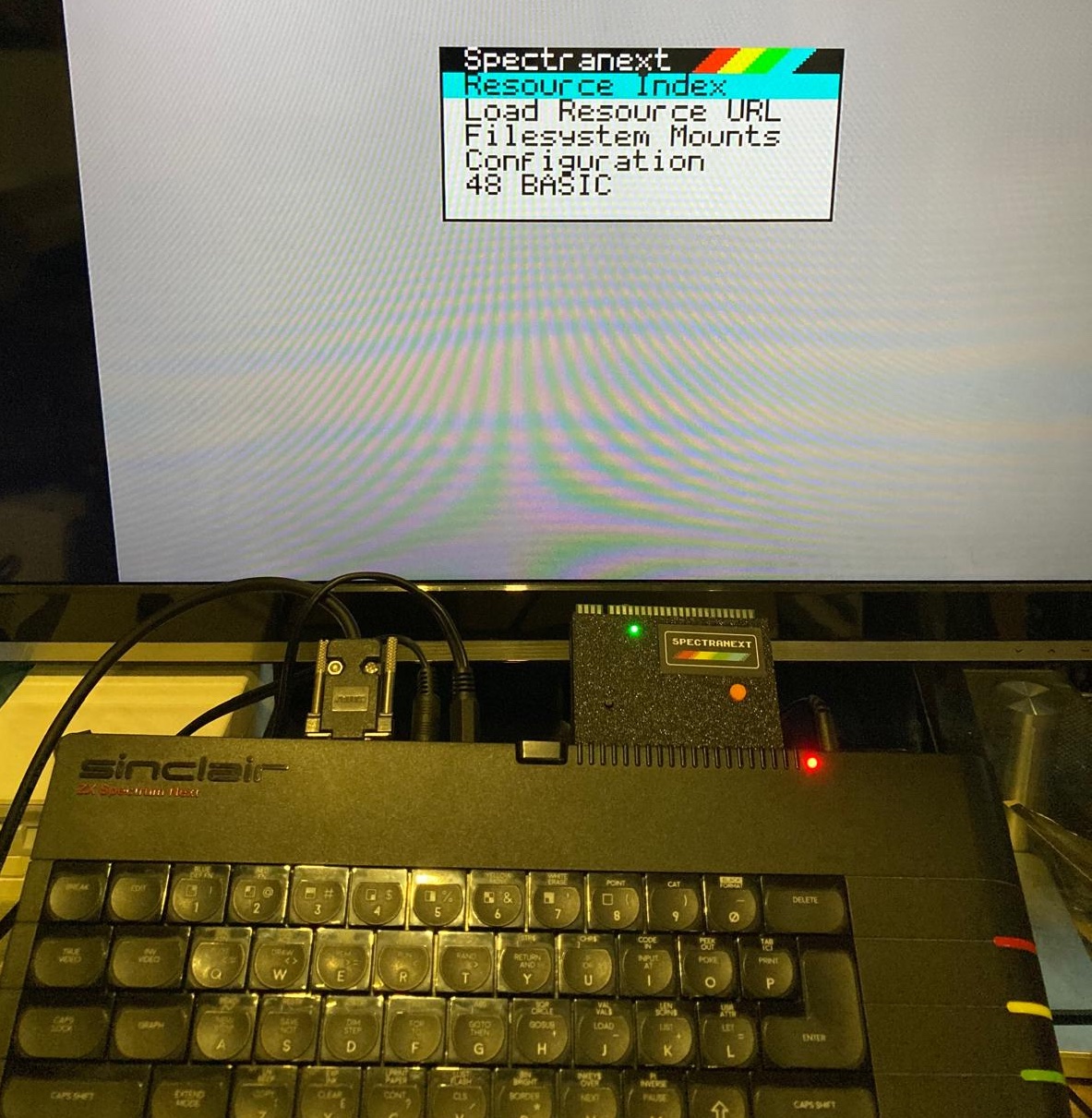
This was implemented with the help of an external tester, who provided access, testing, and feedback on real ZX Spectrum Next hardware while the compatibility work was being developed.
Why support Next
ZX Spectrum Next support was not planned before. Over time, multiple people asked whether the cartridge could also work on the Next, so support for it was added instead of leaving it as an unsupported machine.
Moreover, supporting Next bridges (original) Spectranet and Next communities together, as per testimonies, Spectranet never worked on Next. Particularly this provides Next ability to browse TNFS resources, among other things.
Problem Background
Why "special" support for Next is needed?
Because Spectranext has no CPLD as a deliberate choice, this leaves little margin for error. For that reason it is overclocked: MCU runs at 260Mhz, when one core does regular business logic, the other, essentially, pretends to be CPLD – serves Z80 requests. Effort was made to see if RP's PIO (programmable io) would work – unfortunately it would not.
Spectranext uses Expansion Bus interface, which is mostly about Z80 signals, but also involves Spectrum-specific ones. With that interface, Spectrum asks the cartridge to serve the data from. If you wish to learn about how this works, Z80 Timing and Interface Control Signals document describes it well.
Timing
First of all it is important to acknowledge sheer timing involved: when Z80 makes a request, the cartridge must respond within roughly 80-120 nanoseconds.
The hard part was that the Next is not 100% identical in behavior to a real Z80-based Spectrum. In the end, one of the important differences came down to roughly 20 nanoseconds of correct timing. The ZX Spectrum expansion bus has several key pins involved in this kind of cartridge integration, including ROMCS, IORQ, MREQ, RD, WR, M1, and the address/data lines. The way the Next samples some of these signals turned out to be different from the original hardware: in particular, ROMCS could be sampled once for a bus cycle and then later changes on that line were ignored.
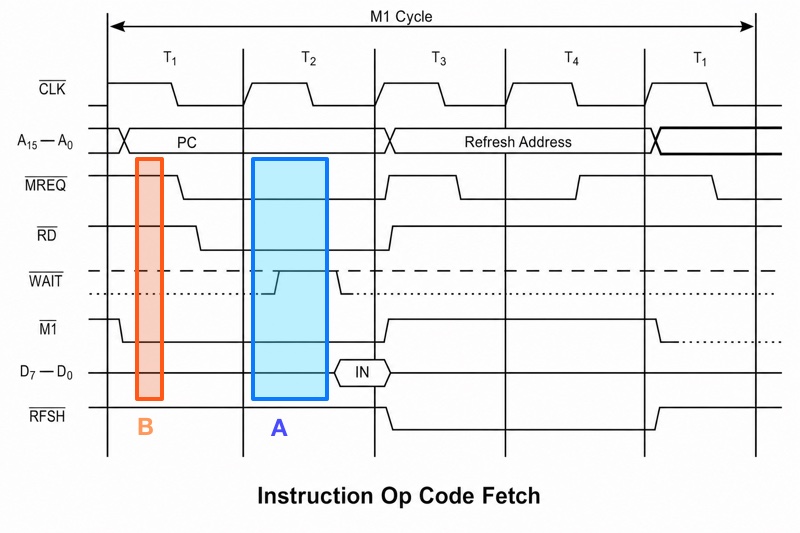
Take notice of example image. Timing zone A (blue) is roughly the timing physical ZX Spectrum would sample memory data lines D0...D7, whichever device that lands to physically. ROMCS here merely physically routes you to that device (which happens to be your cartridge if you drive it now). Timing zone B (orange) is the moment Next samples ROMCS before it decides whenever to sample data internally, or from expansion bus port.
This proven to be especially important on page-in mechanism – it is a precise moment Spectranext decides to intervene and provide its own ROM as substitution. With zone A you can do that at MREQ/RD moment (~ beginning of T2) with zone B you MUST do that by middle of T1.
That meant Spectranext could not just page its ROM in at the same moment that worked on classic machines. A critical piece of the timing logic on the Spectranext had to be changed so the cartridge asserted ROMCS early enough for the Next to see it. That change then broke behavior on classic machines, so the implementation took a few iterations before it worked reliably on both the Next and the older machines.
Note on NEXT's own Wi-Fi chip
Next indeed has Wi-Fi support. However, the built-in Wi-Fi support on the Next is based around an ESP8266-class module.
In fact, Spectranext has originally started with ESP8266. Below you can see a picture of it one of the iterations.
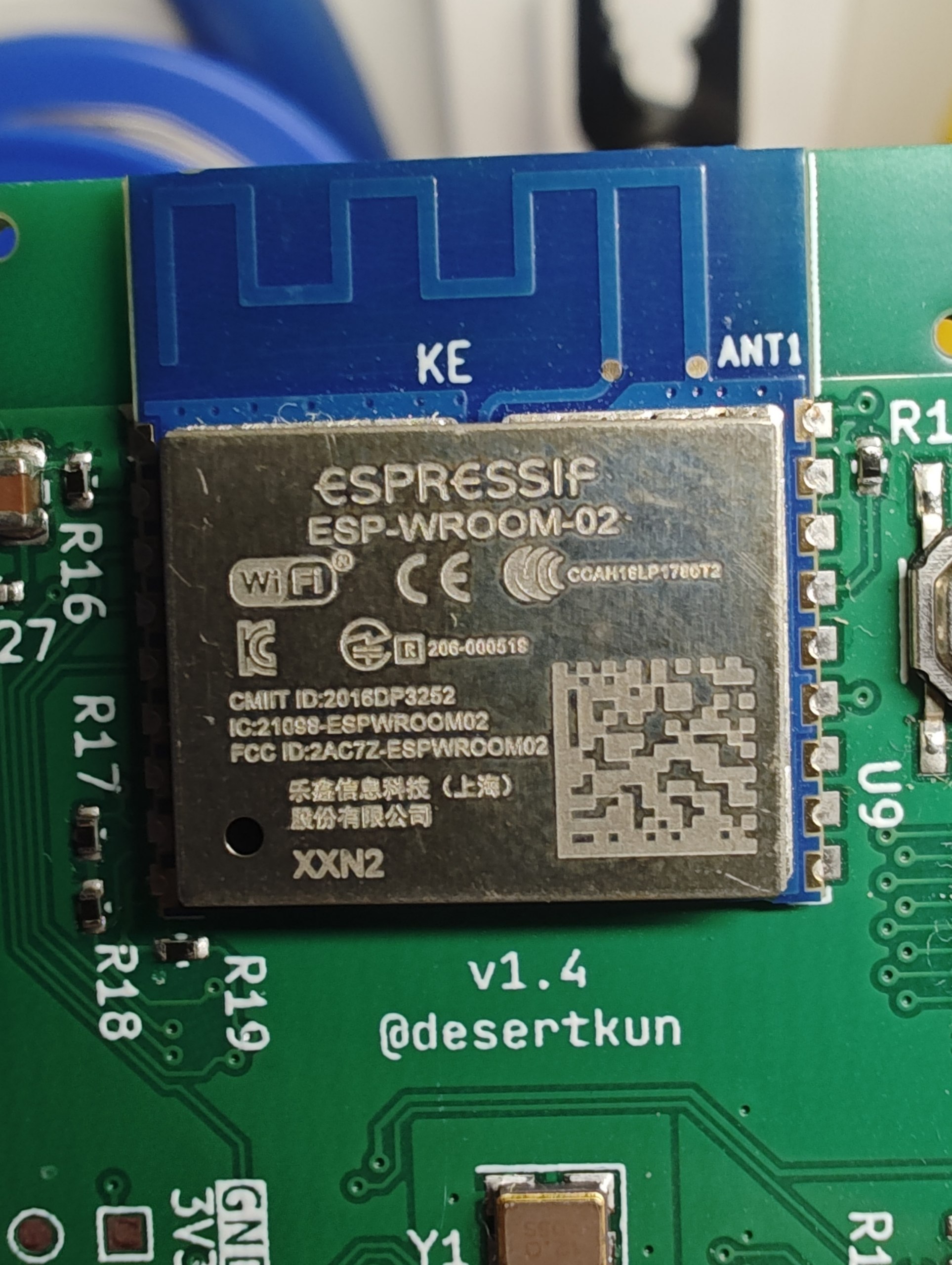
It was slow from the start. For simple connectivity it can work, but it is not a lot of headroom if the goal is to make networking feel practical from an 8-bit machine. You need to do TLS handshakes, certificate handling, HTTPS transfers, and general protocol offloading. Neither ESP8266 nor RP2350 (if decryption would have been done on MCU) have enough memory room to store the whole CA set.
Conclusion
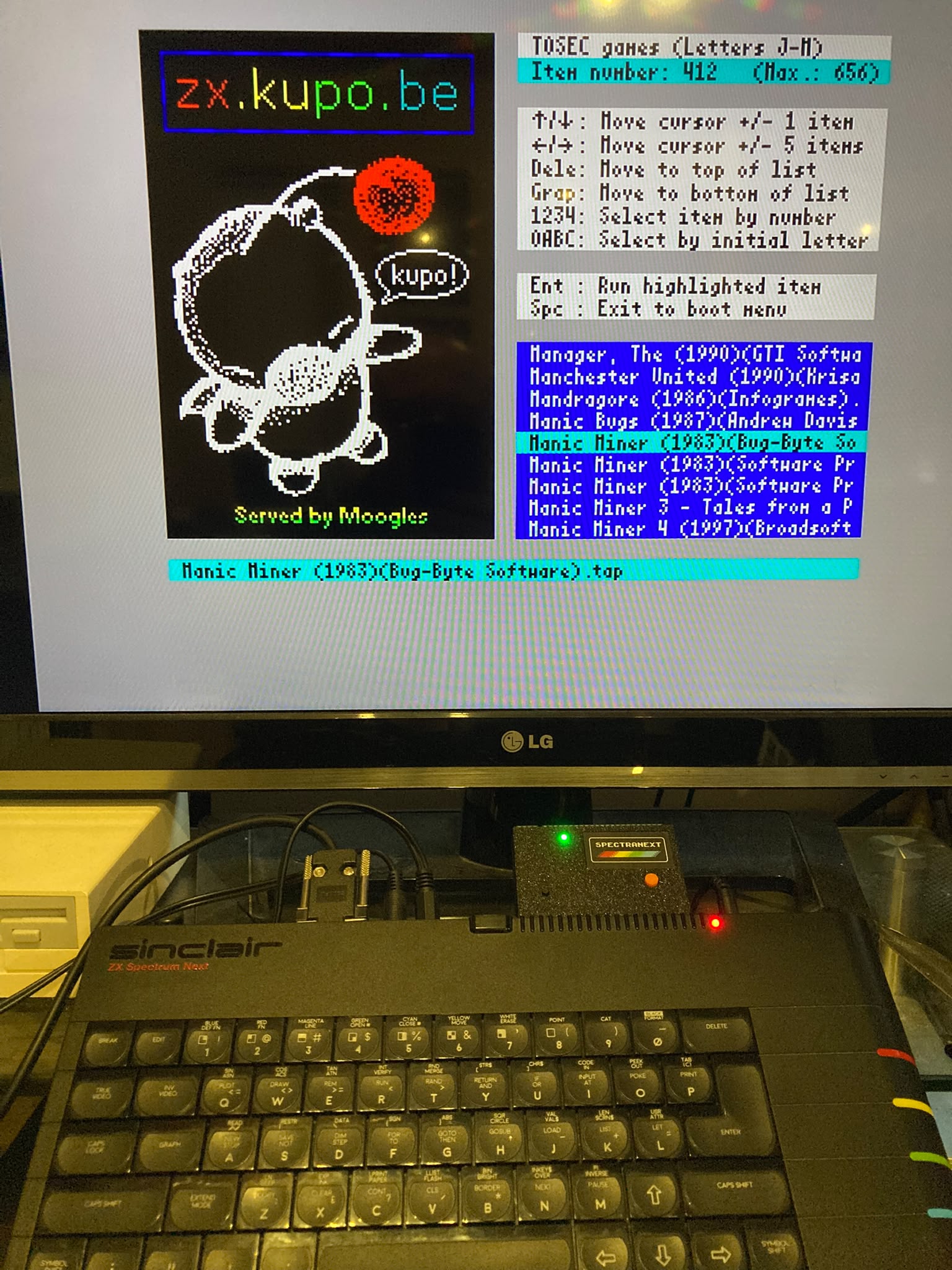
The result is that Spectranext now covers another important machine in the Spectrum family, while keeping support for the classic 48K, 128K, +2, and +3 systems.